A call for freelancers

So in my quest to get my hustle on, I began cold-calling sports editors of papers whose college and pro teams were coming to my town, in case they needed freelancers. Aside from showing up to something and doing your job, using the phone is part of the industry, because there’s a personal connection that’s immediately made through the spoken word. I’ll have a blog on that some day – a PR maven calls it “giving good phone.”

Working the phone four days after I got laid off, I reached the sports editor of a smaller newspaper about 350 miles away. I explained that I was a freelance reporter and I knew one of the teams in his coverage area was going to be in my area, so I gave him a quick rundown of my professional experience and I offered to freelance the game for him.

“We do that on our own,” he told me.

“Do you travel with the team?”

“No.”

“Do you write up the releases from the sports information office?”

“No, we don’t.”

“How do you report on the road games?”

“We watch the web casts and write those up.”

*stunned pause*

“Don’t you think you’re doing your readers a disservice by doing this, by not having a correspondent help you out?”

No answer from said sports editor. He knew.

Because you are.

You are cheating your readers by having your reporters sit in the office and struggle with a web feed. You are contributing to an absence on your paper’s beat and on your reporter’s beat.

Furthermore, you’re contributing to a domino effect of small problems … which almost always tend to amount to bigger problems. Your reporter watches a shoddy Web feed which is blurry and probably craps out 10 times during the course of a game, and your reporter is probably missing a key moment in the game whenever that feed dies.

After the game, you are creating more work for the sports information director who travels with the team. He or she most likely is in the bowels of an arena or on the sidelines on a windy day, and calling you on a shoddy cell phone signal, trying to deal with other reporters and dot-commers who need post-game interviews and are facing a deadline in 14 minutes or less.

And chances are, as your reporter or clerk is trying to do this phone interview, there are phones ringing around you with people calling in local high school sports results.

Susan Powter said it best: “Stop the madness.”

Start using freelancers. There’s an entire network of people across the country to call on, or who are calling you – reporters at other newspapers, college students looking for clips, online folks who still like seeing their name in the paper every so often … or, like me, a freelance sports reporter who’s just trying to get her (or his) groove on.

Your publication will have a presence in that post-game scrum. Chances are, you will have someone who cares about the product they’re filing for you. And you may have a future contact – or a future employee, if you’re impressed by this person’s work and style.

Here’s a complaint I’ve found about not hiring freelancers: “How do we know if they’re worth their salt? We don’t want to spend time cleaning up their work.”

Vet potential freelancers. Have an assistant sports editor or a trusted staffer read through their clips. Ask them to send three links to their published work via email. Be impressed if they ask you if they need to do this for you.

But if you adhere to the status quo, you’re disrespecting your readers. You’re disrespecting your staff. And you’re disrespecting the athletes and the teams and the programs you cover by not having any presence at an event, even if it’s a stringer you’re paying 50 bucks to write 12 inches about the game.

And you’re better than that.

***

So, my small-newspaper peeps, drop me an e-mail at lenzigallagher@gmail.com and tell me what your newspaper does as far as out-of-town coverage goes. Or what your newspaper doesn’t do. And don’t worry, whatever you tell me is completely confidential.

Wave it loud, wave it proud

I love this.

I will admit it. I watched this 17 times after I found it on Twitter. It’s another piece of evidence of why Steelers fans are the best in the world.

(And, yes, I am biased. And I know I’ll hear it from my friends who are Packers fans. Cowboys fans, too. So spare me the argument. We all will win that one.)

We will take our allegiance anywhere – to UNESCO Heritage sites, to weddings, to the tops of skyscrapers, to sandy beaches half a world away.

The Terrible Towel has a story behind it. In 1975, Myron Cope implored Steelers fans to bring a yellow kitchen towel to Three Rivers Stadium to wave – a gimmick. But it became a good luck charm of sorts and it’s a true phenomenon of fan-dom. Plus, each sale of a Terrible Towel goes toward a cause – the Allegheny Valley School receives the profits from sales of each Terrible Towel. Cope gave the organization the rights to the Terrible Towel in 1996.

But each Terrible Towel is not just a token that represents a team. It’s the emblem of a fan base. It’s a sign of what unites us.

My parents are from Pittsburgh and I joke that “in the end, all roads will lead back to Pittsburgh.” But I think about what drew me to so many of my friends: the Steelers. Heck, it’s how I met my husband – talking about the 2005 Steelers. We have our friends from Pittsburgh who we watch Steelers games with. I became friends with another reporter who is a Steelers fan. One of my best friends from college makes a point to call my husband and I from Hawaii during Steelers games. I talk Steelers with one of the NHL coaches I keep in touch with. Everywhere I go, I meet people from Pittsburgh.

Like I told my friend from Hawaii, “This whole thing, it’s bigger than us!”

Pittsburghers are proud of where we came from – and I consider myself “Pittsburgh,” even though I grew up in Maryland and went to college in Pittsburgh. We’re the children of mill workers and coal miners, children who had to leave home to make better lives – because there were no opportunities to make a new life in Pittsburgh. When we came back, we saw our city transformed from a place of  industrial blight to a high-tech, educational and medical epicenter. A cool city.

If you ever hear the song “Black and Yellow” by Wiz Khalifa, take a moment to listen to the words of the song. It’s about swag. It’s about confidence. It’s about continuing to work to be successful – and showing off the fruits of that labor.

It’s about us. It’s Pittsburgh.

You know what it is.

An appeal to Joe Paterno

JoePa. My heart hurts because you are not going out on your own terms, and I know how that feels.

But at the same time, you’re only continuing to hurt yourself.

For so many years you were held in a certain regard in my extended family – I am the grandchild of two blue-collar Western Pennsylvania families, a coal mining family and the family of an immigrant from Italy who worked in a rural glass plant.

My grandfather, God rest his soul, loved sports. He LOVED Penn State football. Fiorino Lenzi adored the fact that an Italian-American man who was raised in the Depression, who earned a scholarship to an Ivy League college after nearly quitting high school, could make himself into one of the most successful and recognizable personalities not only in the state but in the country and in the landscape of college football.

But, JoePa, your downfall and the scandal surrounding your football program have made me reflect on a few things I have learned from the family that adored you for so long. Things that I haven’t seen out of Happy Valley in the past few days.

My family taught me the values of honesty, integrity, of putting in a day of hard work each time we wake up and head out the door. My family taught me that  no matter how little your role is, you are part of a team and a representative of your organization. And you take pride in that and carry yourself with that in mind.

My family taught me not to hide behind a script that I did not create – something I carried into a career in journalism. Transparency is ingrained in every journalist I know worth his or her salt.

My family taught me to speak up when something was wrong.

This is wrong. So wrong. All of it.

Your statement of resignation will not suffice. Your impromptu press conference at your house Tuesday night won’t make up for your program’s transgressions. Your community’s support of your tarnished program is despicable.

And until you speak truthfully, though you probably never will, you remain complicit.

I learned that from my family, too.

Penn State: A lack of institutional control

“Lack of institutional control.”

It’s a term that’s tossed around a lot these days when it comes Division I athletics.

Institutional control is defined by the NCAA committee on infractions in a six-page PDF file that explains compliance to the organization’s rules and regulations:

http://compliance.pac-10.org/thetools/instctl.pdf

But it’s something that can easily be incorporated into our everyday lexicon. We see it in our managers at work. We see it in households, sometimes in our own. We see it in our bank accounts and in our communities.

We see what happens as a result of an absence of accountability.

Things fall apart because of mismanagement, a sequence of personal choices or a lack of checks and balances.

And it’s fully on display at Penn State.

Jerry Sandusky, a former defensive coordinator under Joe Paterno with the Penn State football team, was arrested over the weekend on charges of sexually abusing eight boys over the course of 15 years. The grand jury’s findings are some of the most disturbing and sickening I’ve ever read, as a journalist and as an individual.

http://www.usatoday.com/sports/college/football/story/2011-11-07/penn-state-attorney-general-pdf/51112998/1

This transcends everything and every argument that is being made either for or against Penn State right now – the Penn Staters who are flailing away in an attempt to defend their school and their program (really, there’s no use now), the holier-than-thou iconoclasts who believe that this is another example of universities putting too much stock in their athletic programs and not enough into their educational resources. (Look up Penn State’s annual academic endowment some time.)

Penn State wanted the assembled media at today’s press conference to focus only on Saturday’s football game against Nebraska. Nothing else. No questions about the tornado that’s surrounded Happy Valley.

And when it became clear that the media wasn’t going to follow Penn State’s edict, the school’s president abruptly cancelled the weekly press conference.

A memo to Penn State: Your attempt at damage control won’t help anyone now. And it’s not helping your institution.

No reporter in their right mind was going follow this joke of a gag order.

Instead, Joe Paterno should now take it upon himself to speak out. Not only to defend himself but to explain his actions and the sequence of events that led us, led his football team and led his institution to this point. And to apologize for the mess this has caused Penn State.

For the boys – who are now young men – whose lives have been profoundly changed as a result of Jerry Sandusky’s disturbing and sickening behavior – I am saddened for them and for their families. Even more so now that the trauma has to be publicly rehashed for every one of them.

For Penn State, I’m just angry. Angry that this was allowed to happen for so long. Angry that Joe Paterno didn’t call the police. Angry that Mike McQueary didn’t speak up any louder when he saw what he saw. Angry that administrators seemed to turn the other way.

Angry that right now, Penn State’s administration and its sports information department is making a vain, pathetic attempt to muzzle the media at a point where this story is the biggest one not just in sports but the biggest story in the nation.

Joe Paterno is the most visible figure Penn State has – before this week, chances are that more people outside of Happy Valley could identify Joe Paterno than Penn State’s president Graham P. Spanier.

Joe Paterno has the chance to control this situation, somehow. He has the chance to publicly hold someone accountable. Maybe the institution that’s employed him for so long. Maybe even himself.

Ask yourself this the next time you open the paper

Does the newsroom of your local newspaper or news outlet accurately reflect your community?

And if not, are there staffers – reporters, editors, producers, clerks, managers – who bring a different perspective to the table? One that could potentially enhance what that outlet brings to the table?

I’m curious to find out your thoughts and responses. Drop me an e-mail – lenzigallagher@gmail.com – and let me know. And, yes, your responses will be confidential.

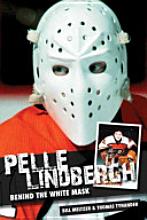
In remembrance of Pelle Lindbergh

This week marks the 26th anniversary of Pelle Lindbergh’s death. Lindbergh was 26 years old, in his third full season with the Philadelphia Flyers and on the verge of becoming one of the first Swedish goalies to become a bonafide NHL star.

Lindbergh crashed his Porsche into the wall of a New Jersey elementary school the morning of Nov. 10, 1985 and died a day later, after being declared brain-dead by doctors. According to police records, his blood-alcohol content was nearly double the legal limit and two passengers in the car were injured.

This book landed on my desk around this time two years ago and I recently re-read it.

After my first read of “Pelle Lindbergh: Behind The White Mask” – and I couldn’t put it down – I took it in to my editor and told him, “Did you know Pelle Lindbergh played in Portland?”

“Write a story about it.”

And I did – an intensive, exhaustive retrospective on Lindbergh’s life, death and legacy that I hoped would do justice while presenting the facts fairly.

I interviewed some of Lindbergh’s former Maine Mariners teammates. I talked to a couple from Florida who were Maine Mariners season ticket holders, who regularly had Lindbergh as a dinner guest at their Portland home. I spoke with the authors, Bill Meltzer and Thomas Tynander. But the hardest thing I had to do was talk to Kevin Cady, one of Lindbergh’s best friends. I worried that I would open old wounds for Cady, who at the time was the Portland Pirates’ equipment manager. I was concerned that he would still be bitter, angry.

But we sat for about 2o minutes above the ice of the Cumberland County Civic Center and talked, not just about Cady’s friendship with Lindbergh, but about Cady’s time in Philadelphia – he was also an equipment manager with the Flyers – about Mike Keenan, about the Pirates’ season and about some of the people we had in common through hockey. And, yes, we laughed about some of his memories of Lindbergh.

Cady, however, said something that struck me about Lindbergh. Something the Swede repeatedly told Cady.

Lindbergh, he said, was the one who always encouraged Cady to pursue his dreams, whether it was going into law enforcement or continuing in hockey.

”He’d ask me, ‘Kevin, what’s your passion?’ ” Cady recalled. ”He told me, ‘Find what you love and go after it. Go for it.’ ”

After the story ran, the American Hockey League promoted it via the league’s Twitter account (@TheAHL) and Flyers fans reached out to me, thanking me for the story (and when I was at the Winter Classic at Fenway Park a couple months later, I told every Flyers fan I met about the book).

Thomas Tynander sent me a touching note on Facebook. He told me that I had put so much heart into the story, and that “Pelle would have loved it.”

Now that I’m in a new phase of life, I’m proud to call Thomas Tynander and Kevin Cady my friends.

And given what everyone told me about him – his passion for life, his drive to succeed, his love of the band Queen – I think I would have adored Pelle Lindbergh had I known him.

A question (or two) for my online peeps

Onliners, let me ask you this:

What do you do when you receive a press release?

Do you simply cut and paste to your site?

Or do you read through it, clean up whatever grammatical issues and passive voice and overall jauntiness there is, and add your own touch to it, while properly attributing it to the person or organization who sent it?

Some bloggers and dot-commers have found their voices and have thrived in the brave world of the Internet, and they’ve utilized those press releases as a starting point for some great work. Others are still cutting and pasting, either not having enough time to sit down and go through the process of writing and personalizing … or just thinking that, hey, this press release will serve my readers.

Chances are, your cut-and-paste may just cause someone to long to stab their eyes out with a pair of scissors. Probably those same scissors you just cut and pasted with.

Public relations firms and publicists aren’t sending out instant copy. They are delivering a message that you need to further by researching it, reporting on it and maybe finding out something different than its original intention.

The journo-PR professional relationship can be a symbiotic one, not an adversarial one. The next time you receive a press release, think about what you can do to create your own message, in sync with and building on the message that’s being given to you. Help the organization that’s helping you. If you have questions, pick up the phone and call the point person on the release. Build that relationship, too.

The dinosaur, the Trash-80, the AMC Pacer, the goon

If there’s as vivid a memory I have of fighting in hockey, it’s from 1991. John Kordic had just joined the Washington Capitals and took on Pittsburgh’s Jay Caulfield in one of the epic Penguins-Capitals games.  As Kordic was escorted off the ice in Landover, Md., he pumped his fists. He tossed equipment. He showboated and gloated on his way to the dressing room.

Kordic died a year later of heart and lung failure as a result of a drug overdose, but in his prime as an NHL tough guy, he was a poster child for the cause. Kordic died in 1992, before the proliferation of the Internet, of 24-hour sports programming, of Twitter, of camera phones, of blogging … elements that have magnified not only the game but its personalities. Kordic’s death did not receive the same attention or scrutiny as those of Rick Rypien, Derek Boogaard and Wade Belak.

In 20 years, yes, the game has drastically changed.

But this week’s Sports Illustrated examined one particular change in the NHL:

The goon is going the way of the dinosaur, the Trash-80 and the AMC Pacer. Extinction. Dave Taylor, St. Louis’ director of player personnel, told SI as much:

“With the direction our game is going, I think that (player) is going to be a dying breed.”

And few in any front office will publicly admit it, but the game needs fighting. It needs it to keep the game honest and, yes, to keep the fans intrigued. You slow down when you see a car accident, don’t you?

In writing my senior thesis – a content analysis of how violence is portrayed in marketing by NHL teams and how it correlated with attendance and the growth of fan interest – I discovered this much: In the late 1990s, the NHL didn’t condone the use of fighting or violence as a marketing tool … but NHL teams wouldn’t hesitate to use the goons as a way to sell the product. Their ads for season ticket packages and televised games said as much.

But since that thesis was written, the scene around the game has changed. Enterprise Rent-A-Car ads have replaced Tip Top ads along the boards. Martinis and mixed drinks have replaced draft beer in the stands. Composite sticks have meant death to the old Christian “twig.” And the goon is being abandoned for the pest – a guy who can get under another player’s skin, but who also has the right amount of skills to carve out a career in the NHL. Think Daniel Carcillo, Matt Cooke, Alex Burrows, Sean Avery ….

Fighting will continue be a part of the game at the NHL level. But with the way the game has changed  – and the questions that now surround that role- who will be left to carry on that tradition?

Pardon the interruption …

One thing that surprises me – and it shouldn’t – is how resistant people are to change and adaptation.

So in the quest to continue my hustle, I emailed an acquaintance about the possibility of utilizing social media to promote her cause. I got pretty much a “no” with a small window for “possibly.” There was hesitancy to promote the specific cause with the use of social media, but when I pitched a cause in general, the “possibility” arose.

A few minutes after the exchange, I was reminded that Pardon the Interruption on ESPN was celebrating its 10th anniversary of being on the air. PTI, as it’s colloquially known, is a touchstone. An agent for change.

Has it been 10 years?

The premise of the show was outrageous, edgy and a bit narcissistic. Two sportswriters – one who’d been on the Washington D.C. sports scene for years and the other about to make his name (and his brand) go national – sitting at a table frankly talking, sometimes in blunt terms, about the issues and happening in sports. It took a bit for the show and its premise to catch fire, but it really started the movement of reporters diversifying themselves and their brand in another mediums.

Then on my Twitter feed, I attempted to start the dialogue about the 10th year of ESPN’s Pardon The Interruption.

Of course, the first reponse I got on Twitter was from a veteran reporter who disliked the idea of reporters going to another medium. It was in the tone of: “Stay in newspapers! Don’t do anything else!”

That’s wrong. Think about it. That’s why so much in nature is dead or has changed. It couldn’t survive or was killed, or it couldn’t keep up. Or was resistant to keeping up. And that’s what is hurting some journalists and hurting newspapers.

I’m sure some of the older journos will disagree with me, but consider this – a guy I worked with was all for incorporating technology and new information transit means into sending the messages. And he was 53!

Caught on film

When Washington Capitals captain Alex Ovechkin called fifth-year coach Bruce Boudreau whatever it was the cameras caught during Washington’s 5-4 overtime win Tuesday against Anaheim, there was the perception that one had disrespected the other – in both directions.

Boudreau believed Ovechkin wasn’t capable of producing in a key moment of the game and benched the captain, with the Capitals down 4-3 late in regulation.

Boudreau didn’t think Ovechkin would be the guy to score THE goal. Instead, it was Nicklas Backstrom, who tied the game then scored the subsequent game-winning goal in overtime.

“I’m gonna put out the guys I think are gonna score the goals,” Boudreau said during the post-game press conference, which has been shown repeatedly on NHL Network.

In the media scrum after practice the next day, Ovechkin was frank in discussing his feelings about being benched:

“I was pissed off. Of course I want to be in that situation on the ice and you know it doesn’t matter who I said and what I said.” (via the Washington Post’s Capitals Insider)

Ovechkin later had a sense of humor about the whole situation, saying he hadn’t been benched since he was a teenager. But the Caps are going to win from here on out by any means necessary. Even if it means holding their captain to a higher standard, when he wasn’t playing his best game of the season.

But this raises a question. Was Ovechkin’s on-camera something simply said in the heat of the moment? Is it Exhibit A of a lack of respect between one of the NHL’s stars and his coach? Or was Ovechkin simply caught on camera – framed, in a sense?

***

Here’s some food for thought.

In 1989 a superstar called out his coach – and was rumored to have given management an ultimatum at a time when his team was a mess.

Unlike the Caps right now, who are third in the Eastern Conference with a bullet. So this isn’t a parallel. Again, food for thought.

From the L.A. Times, Dec. 20, 1989:

Eddie Johnston, former general manager of the Pittsburgh Penguins, has defended Mario Lemieux in his war of words with Gene Ubriaco.

Ubriaco, fired Dec. 5 as coach of the Penguins, told the Harrisburg (Pa.) Patriot-News that trying to coach Lemieux was “like trying to teach a shark table manners” and “in the end, guys like Mario and Paul (Coffey) were awfully greedy.”

Johnston, now general manager of the Hartford Whalers, said: “I don’t like to hear Ubriaco put the blame on Mario. I’ve been with Mario for seven years, and he’s never been a problem. I don’t understand Ubriaco claiming that Mario and Coffey were the ones responsible for getting him out of there.”

Add Penguins: Lemieux on Ubriaco: “He spent 15 years in the minors when he was playing and coaching. That’s where he belongs.”