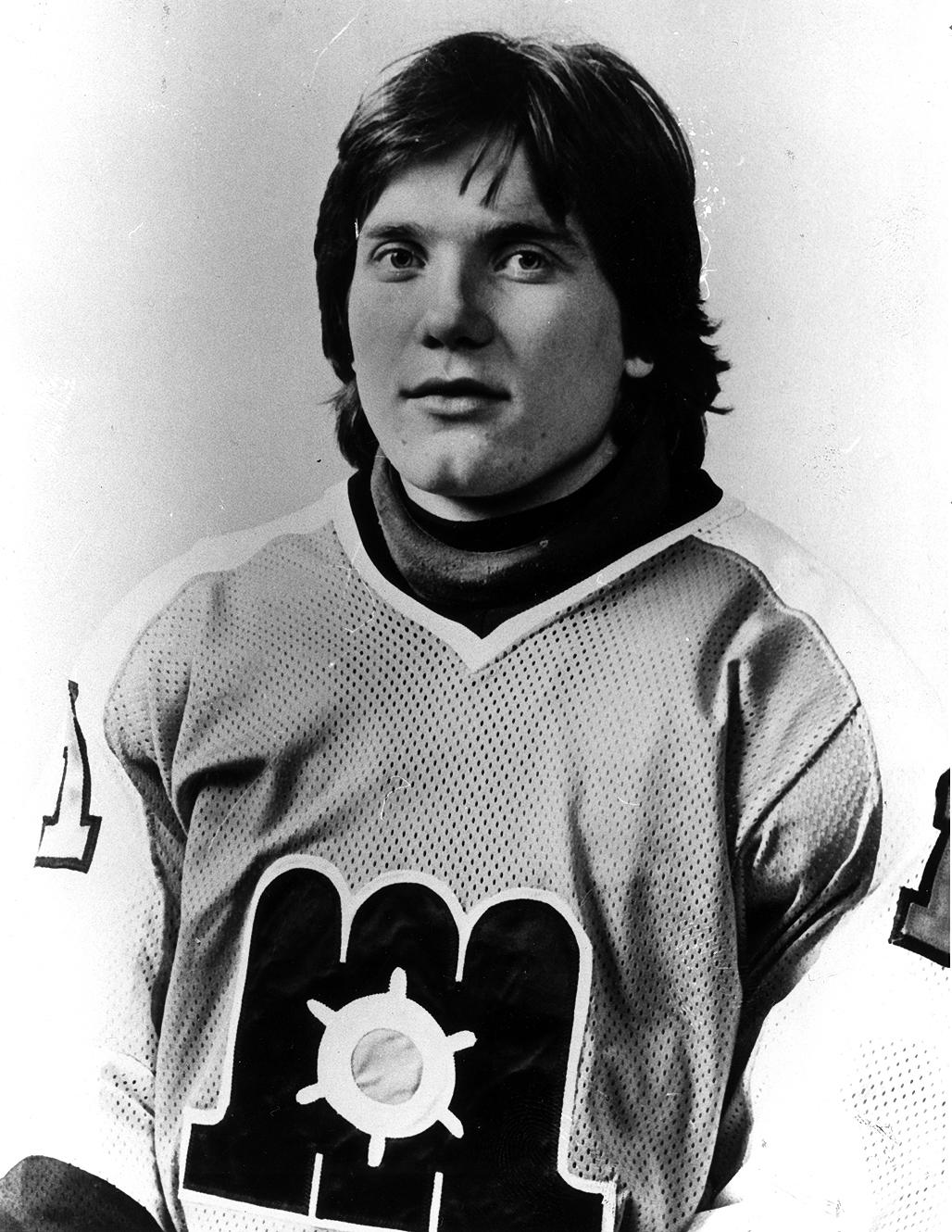
In remembrance of Pelle Lindbergh

This week marks the 26th anniversary of Pelle Lindbergh’s death. Lindbergh was 26 years old, in his third full season with the Philadelphia Flyers and on the verge of becoming one of the first Swedish goalies to become a bonafide NHL star.

Lindbergh crashed his Porsche into the wall of a New Jersey elementary school the morning of Nov. 10, 1985 and died a day later, after being declared brain-dead by doctors. According to police records, his blood-alcohol content was nearly double the legal limit and two passengers in the car were injured.

This book landed on my desk around this time two years ago and I recently re-read it.
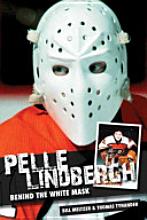
After my first read of “Pelle Lindbergh: Behind The White Mask” – and I couldn’t put it down – I took it in to my editor and told him, “Did you know Pelle Lindbergh played in Portland?”

“Write a story about it.”

And I did – an intensive, exhaustive retrospective on Lindbergh’s life, death and legacy that I hoped would do justice while presenting the facts fairly.

I interviewed some of Lindbergh’s former Maine Mariners teammates. I talked to a couple from Florida who were Maine Mariners season ticket holders, who regularly had Lindbergh as a dinner guest at their Portland home. I spoke with the authors, Bill Meltzer and Thomas Tynander. But the hardest thing I had to do was talk to Kevin Cady, one of Lindbergh’s best friends. I worried that I would open old wounds for Cady, who at the time was the Portland Pirates’ equipment manager. I was concerned that he would still be bitter, angry.

But we sat for about 2o minutes above the ice of the Cumberland County Civic Center and talked, not just about Cady’s friendship with Lindbergh, but about Cady’s time in Philadelphia – he was also an equipment manager with the Flyers – about Mike Keenan, about the Pirates’ season and about some of the people we had in common through hockey. And, yes, we laughed about some of his memories of Lindbergh.

Cady, however, said something that struck me about Lindbergh. Something the Swede repeatedly told Cady.

Lindbergh, he said, was the one who always encouraged Cady to pursue his dreams, whether it was going into law enforcement or continuing in hockey.

”He’d ask me, ‘Kevin, what’s your passion?’ ” Cady recalled. ”He told me, ‘Find what you love and go after it. Go for it.’ ”

After the story ran, the American Hockey League promoted it via the league’s Twitter account (@TheAHL) and Flyers fans reached out to me, thanking me for the story (and when I was at the Winter Classic at Fenway Park a couple months later, I told every Flyers fan I met about the book).

Thomas Tynander sent me a touching note on Facebook. He told me that I had put so much heart into the story, and that “Pelle would have loved it.”

Now that I’m in a new phase of life, I’m proud to call Thomas Tynander and Kevin Cady my friends.

And given what everyone told me about him – his passion for life, his drive to succeed, his love of the band Queen – I think I would have adored Pelle Lindbergh had I known him.

A question (or two) for my online peeps

Onliners, let me ask you this:

What do you do when you receive a press release?

Do you simply cut and paste to your site?

Or do you read through it, clean up whatever grammatical issues and passive voice and overall jauntiness there is, and add your own touch to it, while properly attributing it to the person or organization who sent it?

Some bloggers and dot-commers have found their voices and have thrived in the brave world of the Internet, and they’ve utilized those press releases as a starting point for some great work. Others are still cutting and pasting, either not having enough time to sit down and go through the process of writing and personalizing … or just thinking that, hey, this press release will serve my readers.

Chances are, your cut-and-paste may just cause someone to long to stab their eyes out with a pair of scissors. Probably those same scissors you just cut and pasted with.

Public relations firms and publicists aren’t sending out instant copy. They are delivering a message that you need to further by researching it, reporting on it and maybe finding out something different than its original intention.

The journo-PR professional relationship can be a symbiotic one, not an adversarial one. The next time you receive a press release, think about what you can do to create your own message, in sync with and building on the message that’s being given to you. Help the organization that’s helping you. If you have questions, pick up the phone and call the point person on the release. Build that relationship, too.

The dinosaur, the Trash-80, the AMC Pacer, the goon

If there’s as vivid a memory I have of fighting in hockey, it’s from 1991. John Kordic had just joined the Washington Capitals and took on Pittsburgh’s Jay Caulfield in one of the epic Penguins-Capitals games.  As Kordic was escorted off the ice in Landover, Md., he pumped his fists. He tossed equipment. He showboated and gloated on his way to the dressing room.

Kordic died a year later of heart and lung failure as a result of a drug overdose, but in his prime as an NHL tough guy, he was a poster child for the cause. Kordic died in 1992, before the proliferation of the Internet, of 24-hour sports programming, of Twitter, of camera phones, of blogging … elements that have magnified not only the game but its personalities. Kordic’s death did not receive the same attention or scrutiny as those of Rick Rypien, Derek Boogaard and Wade Belak.

In 20 years, yes, the game has drastically changed.

But this week’s Sports Illustrated examined one particular change in the NHL:

The goon is going the way of the dinosaur, the Trash-80 and the AMC Pacer. Extinction. Dave Taylor, St. Louis’ director of player personnel, told SI as much:

“With the direction our game is going, I think that (player) is going to be a dying breed.”

And few in any front office will publicly admit it, but the game needs fighting. It needs it to keep the game honest and, yes, to keep the fans intrigued. You slow down when you see a car accident, don’t you?

In writing my senior thesis – a content analysis of how violence is portrayed in marketing by NHL teams and how it correlated with attendance and the growth of fan interest – I discovered this much: In the late 1990s, the NHL didn’t condone the use of fighting or violence as a marketing tool … but NHL teams wouldn’t hesitate to use the goons as a way to sell the product. Their ads for season ticket packages and televised games said as much.

But since that thesis was written, the scene around the game has changed. Enterprise Rent-A-Car ads have replaced Tip Top ads along the boards. Martinis and mixed drinks have replaced draft beer in the stands. Composite sticks have meant death to the old Christian “twig.” And the goon is being abandoned for the pest – a guy who can get under another player’s skin, but who also has the right amount of skills to carve out a career in the NHL. Think Daniel Carcillo, Matt Cooke, Alex Burrows, Sean Avery ….

Fighting will continue be a part of the game at the NHL level. But with the way the game has changed  – and the questions that now surround that role- who will be left to carry on that tradition?

Pardon the interruption …

One thing that surprises me – and it shouldn’t – is how resistant people are to change and adaptation.

So in the quest to continue my hustle, I emailed an acquaintance about the possibility of utilizing social media to promote her cause. I got pretty much a “no” with a small window for “possibly.” There was hesitancy to promote the specific cause with the use of social media, but when I pitched a cause in general, the “possibility” arose.

A few minutes after the exchange, I was reminded that Pardon the Interruption on ESPN was celebrating its 10th anniversary of being on the air. PTI, as it’s colloquially known, is a touchstone. An agent for change.

Has it been 10 years?

The premise of the show was outrageous, edgy and a bit narcissistic. Two sportswriters – one who’d been on the Washington D.C. sports scene for years and the other about to make his name (and his brand) go national – sitting at a table frankly talking, sometimes in blunt terms, about the issues and happening in sports. It took a bit for the show and its premise to catch fire, but it really started the movement of reporters diversifying themselves and their brand in another mediums.

Then on my Twitter feed, I attempted to start the dialogue about the 10th year of ESPN’s Pardon The Interruption.

Of course, the first reponse I got on Twitter was from a veteran reporter who disliked the idea of reporters going to another medium. It was in the tone of: “Stay in newspapers! Don’t do anything else!”

That’s wrong. Think about it. That’s why so much in nature is dead or has changed. It couldn’t survive or was killed, or it couldn’t keep up. Or was resistant to keeping up. And that’s what is hurting some journalists and hurting newspapers.

I’m sure some of the older journos will disagree with me, but consider this – a guy I worked with was all for incorporating technology and new information transit means into sending the messages. And he was 53!

Caught on film

When Washington Capitals captain Alex Ovechkin called fifth-year coach Bruce Boudreau whatever it was the cameras caught during Washington’s 5-4 overtime win Tuesday against Anaheim, there was the perception that one had disrespected the other – in both directions.

Boudreau believed Ovechkin wasn’t capable of producing in a key moment of the game and benched the captain, with the Capitals down 4-3 late in regulation.

Boudreau didn’t think Ovechkin would be the guy to score THE goal. Instead, it was Nicklas Backstrom, who tied the game then scored the subsequent game-winning goal in overtime.

“I’m gonna put out the guys I think are gonna score the goals,” Boudreau said during the post-game press conference, which has been shown repeatedly on NHL Network.

In the media scrum after practice the next day, Ovechkin was frank in discussing his feelings about being benched:

“I was pissed off. Of course I want to be in that situation on the ice and you know it doesn’t matter who I said and what I said.” (via the Washington Post’s Capitals Insider)

Ovechkin later had a sense of humor about the whole situation, saying he hadn’t been benched since he was a teenager. But the Caps are going to win from here on out by any means necessary. Even if it means holding their captain to a higher standard, when he wasn’t playing his best game of the season.

But this raises a question. Was Ovechkin’s on-camera something simply said in the heat of the moment? Is it Exhibit A of a lack of respect between one of the NHL’s stars and his coach? Or was Ovechkin simply caught on camera – framed, in a sense?

***

Here’s some food for thought.

In 1989 a superstar called out his coach – and was rumored to have given management an ultimatum at a time when his team was a mess.

Unlike the Caps right now, who are third in the Eastern Conference with a bullet. So this isn’t a parallel. Again, food for thought.

From the L.A. Times, Dec. 20, 1989:

Eddie Johnston, former general manager of the Pittsburgh Penguins, has defended Mario Lemieux in his war of words with Gene Ubriaco.

Ubriaco, fired Dec. 5 as coach of the Penguins, told the Harrisburg (Pa.) Patriot-News that trying to coach Lemieux was “like trying to teach a shark table manners” and “in the end, guys like Mario and Paul (Coffey) were awfully greedy.”

Johnston, now general manager of the Hartford Whalers, said: “I don’t like to hear Ubriaco put the blame on Mario. I’ve been with Mario for seven years, and he’s never been a problem. I don’t understand Ubriaco claiming that Mario and Coffey were the ones responsible for getting him out of there.”

Add Penguins: Lemieux on Ubriaco: “He spent 15 years in the minors when he was playing and coaching. That’s where he belongs.”

99 cents?

Not too long ago I read a story on Poynter.org – an online outlet of the Poynter Institute, a journalism school and resource based in Florida – about media analyst Edward Atorino proposing that a dollar surcharge should be added to the New York Times’ Sunday subscribers. This is in relation to the New York Times’ CEO participating in an online discussion regarding the company’s third-quarter earnings.

Regarding the pricing of the digital product, the Sunday package is very strong. And I hear a lot of people get the Sunday package because they get the online for free. Have you thought about charging those folks $1 a week or something? You’d get an awful lot of additional dollars right to the bottom line. Or generally, price — charge the print subscriber a little bit to get the online.

The New York Times insisted it won’t go this rout. But it raises a question. Is information a commodity? Maybe it should be. (Of course, as a downsized reporter, I am biased).

And the dollar surcharge got me to thinking about how it goes in Europe, or at least in European countries that use the Euro as their currency.

Now, I love Europe. I joke that in my time off when I’m not getting my hustle on, I’m living like a Euro. Spending time with friends and loved ones, riding my bike, drinking coffee, watching sports, reading, thinking about work but not making it the center of my life …

But everywhere I went in Europe I noticed something. Prices of everything were in 1-euro denominations, or rounded to a denomination of five or 10. A Kinder bar was one euro. A bottle of wine was 6.50 euro. A magazine was 2.25 euro. When I came back to the United States I was overwhelmed with how many things I saw that cost 2.99 or 29.99 … Or the cost ended in a “.99” … it’s like a nation of Gretzkys … No disrespect to the Great One.

But what if we were to do like the Euros? Increase the price by a penny. Make something worth a dollar instead of 99 cents. Would those pennies add up? Probably. Because with the way our economy is flailing and flopping, it might be worth investing an extra penny or two. I’m no economist by any means but it’s worth a shot.

Expose the game

They say any publicity is good publicity, right? And a network TV contract shouldn’t hurt, either.

NBC Sports Group’s announcement that it will begin airing college hockey games after Christmas is a boon for the exposure of the sport, which, until very recently, had a cult following and had been relegated to a status similar to women’s college soccer and track and field.

VERSUS, which will be rebranded as NBC Sports Network on Jan. 2, will broadcast 16 regular-season games in high definition. When Notre Dame joins Hockey East as the league’s 11th team in the fall of 2013-2014 (and a source tells me Holy Cross is high on Hockey East’s wish list as the league’s 12th team), the Irish will have every home game broadcast on NBC Sports. Which also means every Hockey East contest at the Compton Family Ice Arena.

(Picture Touchdown Jesus saying it – “Who needs the Big Ten Hockey Conference, anyways?”)

Furthermore, Hockey East announced a multi-year deal with NBC Sports Network to broadcast Hockey East games, including the 2012 tournament, which starts at four host sites and then moves to Boston’s TD Garden for the championship semifinals and championship game. Though, of NBC/Versus’ 16-game regular-season schedule this season, only three will involve Hockey East teams:

  • Boston University at Notre Dame, Dec. 31
  • Boston College at Vermont, Feb. 10
  • Boston University at Vermont, Feb. 24

But this is a start. This schedule now leaves the door open for NBC Sports to tinker with the product in the future – adding more games, finding out which arenas have the best atmosphere, learning what works and what doesn’t …

NBC/VERSUS coverage of college hockey is a good thing – again, sheerly for EXPOSURE. How many times have you turned on your basic cable sports stations and seen a nationally televised college hockey game?

ESPN, ESPN2, ESPN3 (the four-letter network’s Internet outlet) and ESPNU have typically broadcast the NCAA Tournament and the Frozen Four. In a way, it seems as if ESPN has monopolized the NCAA hockey tournament. Otherwise, college hockey has been confined to regional and local networks – some that weren’t easily accessible nationwide, unless you had DirecTV or the digital sports tier on your local cable provider.

For example – there are a few regional networks:

  • Big Ten Network
  • New England Sports Network
  • Fox Sports North
  • Root Sports

Even though I like watching the regional feeds – watching Maine-North Dakota a few weeks ago, I got a kick out of some of the commercials from the Grand Forks area – regionalization of the sport hinders the growth and exposure of college hockey.

What’s one of the elements that has helped the popularity of the NHL grow in the last 15 years?

The transition from broadcasting games on regional carriers such as WOR-New York, the late Home Team Sports and SportsChannel to … network television.

Get my drift?

***

If you want to see an entire schedule of televised college hockey for the 2011-2012 season, here’s a list from USCHO.com:

http://www.uscho.com/tv/

(disclosure – I’m a contributor to USCHO.com.)

Having dreams is what makes life tolerable. Keep dreaming.

Each day I got closer to leaving the paper, I was deeply touched by the people who reached out to me when I was going through a rough time, about to leave a job I loved and had wanted since I was 14 years old, to cover hockey.

Not the number of people but the people.

A former college hockey coach who has moved on to bigger and better things sent me a very encouraging email when I arrived home from one of my last days from work. It further affirmed my belief that the hockey world isn’t as much of a big world as it is really just one big community. We saw that during the Lokomotiv tragedy. We saw that with the deaths of Wade Belak, Rick Rypien and Derek Boogaard. We saw how people cared. We saw compassion. We saw people reach out to each other and help.

But the same night I received the email from the NHL coach – and I was still emotional and in shock – I found some hope, as I stumbled upon the story of Bracken Kearns.

Kearns made his NHL debut at the age of 30, when some hockey players are on the edge of becoming a has-been. Or a never-was.

Kearns chased the dream.

http://www.miamiherald.com/2011/10/21/2465974/florida-panthers-kearns-quick.html

Kearns played in two games this season with the Panthers before being returned to their minor-league affiliate in San Antonio.

“It’s not a downer,” Kearns told the CBC. “Nobody likes to get sent down. But it was such a great experience and it went by so fast. It has been unbelievable being back.”

Let’s talk a little more about chasing the dream. And I’ll make it quick.

One of my favorite movies is “Rudy.” Not just because I’m a Notre Dame fan, but because there’s a very prophetic line in a story of a guy who chases down his dream. Rudy and his best friend, Pete, are sitting together during a lunch break at the mill, and Pete gives Rudy a Notre Dame jacket as a birthday gift.

“You’re the only one who ever took me seriously, Pete,” Rudy says.

“Well, you know what my dad always said,” Pete responded. “Having dreams is what makes life tolerable.”

No shoes?

“You think it’s bad when you have no shoes. Then you meet a man who has no feet.”

Consider that. When you think your situation is just unbearable, chances are that you come across someone who’s dealing with a much heavier burden than you.